
Dog training questions answered from Lead or Be Led 2.0
Most dog behavior problems come down to leadership, communication, and meeting a dog’s natural needs. In Lead or Be Led 2.0, Trina R. Eddy shares what our family has learned in more than 30 years of training. Here are short answers to the questions owners ask us most, from leadership and enrichment to choosing the right puppy.
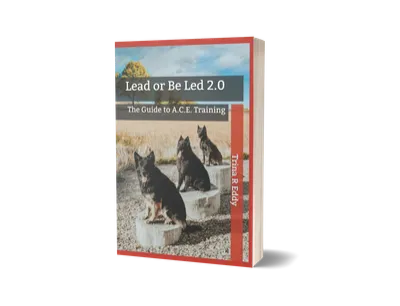
Lead or Be Led 2.0 by Trina R. Eddy
Learn the leadership-based approach our whole team uses, written by our CEO, Trina Eddy. Download a free PDF copy, or get it in paperback, Kindle, or Audible on Amazon. A copy is also included with every behavioral evaluation.
Our family is featured in the Inside Success TV documentary Beyond the Leash. Watch it here →
Find your question
A dog only stays trained when the people at home know what to do. That’s why every A Canine Experience program includes training with you, and why we wrote the book.
Leadership: the foundation of our behavior work
What does being my dog's leader actually mean?
Leadership is the art of motivating your dog to work with you toward a common goal and helping him reach his full potential. It has nothing to do with being heavy-handed or physically strong. Great leaders are calm, fair, consistent, and clear, and they understand one basic principle: reinforcement drives behavior.
From the book: What Is Leadership?Why is leadership the foundation for fixing behavior problems?
Many behavior problems start when a dog is left to make decisions he isn't equipped to make, like who comes to the door, who gets near his food, or how to handle a scary situation. That pressure causes stress, and a stressed or fearful dog is more likely to bite. Most dogs feel real relief when someone else takes on the leadership role. Clear, predictable rules and boundaries give them that.
From the book: Leaders Remain Calm and FairDoes a dominant dog have to be aggressive?
No. A truly dominant dog doesn't need to act aggressively; it controls space and resources with posture and confidence. Problems tend to show up when a dog is left to run the household. Some become controlling and pushy, and less confident dogs can become anxious and fearful, which can lead to nipping or biting. Clear structure takes that pressure off your dog.
From the book: Leaders Display Dominant PosturingHow do I show my dog leadership in everyday life?
Through small, consistent routines. Have your dog earn his meals with a sit or another behavior, go through doors first while he waits, decide who controls the space and the toys, and stay calm and fair when things go wrong. Dogs read these everyday signals far more than anything you say.
From the book: Pack StructureShould my dog sleep on my bed?
If it isn't causing a problem, enjoy it. Plenty of dogs sleep on the bed without any trouble, and many service dogs, especially medical alert dogs, need to be close to their person at night. Where it can become a problem is with dogs who start to claim the bed as theirs. Some growl or snap when they're bumped or asked to move, and some try to keep people or other pets off the bed altogether. If you see signs like these, that's the time to make the bed off-limits and get help.
From the book: Leaders Sleep in the Highest, Softest PlaceWhy does my dog listen to my partner but not to me?
Dogs read body language constantly, including your posture, where you're looking, your tone, and how consistently you follow through. Your dog has noticed differences between the two of you. Standing up straight when you give a cue, expecting the cue to be followed, and using the same rules every time all help. Your dog also senses stress and frustration, so stay calm and take a break if you need one.
From the book: Leaders Remain Calm and FairWalks and everyday manners
Why doesn't my dog listen to me?
When a dog doesn't respond, it's usually because he doesn't fully understand what you're asking yet, what you're offering isn't worth it to him, he's too overstimulated to think, or he's learned that you don't always follow through. Find out what truly motivates your dog, practice in calmer places before busy ones, and be consistent so your words mean the same thing every time.
From the book: Motivation and DriveWhy does my dog pull on the leash?
Because pulling has worked. Many owners let the walk become the dog's show. Ask your dog to sit while you clip on the leash and to wait while you go through the door first. When he pulls ahead, turn and move the other way with intent, and reward him when he comes back to your side. Or stop every time the leash goes tight and only move forward when it's loose. Sniffing time is great, on your release cue.
From the book: Leaders Go FirstWhy does my dog ignore me on walks?
Often your dog is overstimulated, and an overstimulated dog can't focus. Walk calmly in big circles until he settles and starts glancing at you, then reward each glance with a “Good” and a treat while you keep moving. Gradually ask for a few more steps between rewards. If he can't settle, move somewhere less exciting and build up from there.
From the book: Let’s GoHow do I stop my dog from jumping on people?
Jumping is one of the ways dogs use their bodies to control space and attention. Give attention for four paws on the floor, not for jumping. Turn away when he jumps and greet him when he sits. Ask visitors to do the same. Have your dog sit to earn petting, so his attention-seeking becomes something you ask for instead of something he demands.
From the book: Leaders Control SpaceHow do I get my dog to come when called?
Make coming to you the best thing that happens all day. Pair a happy recall call with something your dog loves, and use the same tone each time. Don't chase your dog to catch him; that teaches him to run. Instead, become exciting as you move away from him, and play games that reward him for coming to you.
From the book: Come to Me & Leaders Don’t ChaseWhy does my dog bark and lunge at other dogs on leash?
When a dog puts on a scary show and the other dog or person leaves, the show worked, and the owner's tight leash and worry make it worse next time. Stay calm, keep tension off the leash, and redirect before your dog is overstimulated, as soon as he stares, stiffens, or drives forward. Rewarding him for moving away from the trigger helps. Dogs with an aggression history need professional guidance.
From the book: Leaders Control SpaceFun, enrichment, and natural drives
What are my dog's natural drives?
Drives are instinctive behaviors dogs inherit from their parents. They fall into three main groups: pack drive (being part of a group, play, contact), prey drive (searching, chasing, catching, shaking, carrying), and defense drive (protecting themselves and their things, or fleeing). Every dog has a different mix, and knowing your dog's mix tells you how to reward and motivate him.
From the book: Motivation and DriveWhy does my dog need enrichment?
Dogs need outlets for the instincts they were born with, even if they never have to hunt or work for a living. When those drives have no outlet, they often show up as chewing, digging, barking, or chasing. A good leader gives a dog an enriching environment where he can explore, solve problems, and build confidence. Even 15 minutes of mental work can tire a dog more than hours of running.
From the book: Motivation and DriveHow do I find out what motivates my dog?
Watch your dog. Does he love chasing, tugging, sniffing, chewing, food, or just being with you? Most dogs are more food motivated than their owners think; dogs who seem uninterested often have free access to food and boring treats. Hand-feeding meals and using high-value treats can build food drive, and toys and play build the rest.
From the book: Motivation and DriveWhat are good enrichment games for my dog?
Scatter part of a meal in the grass or in boxes so your dog can hunt for it, play with a flirt pole to satisfy the urge to chase and catch, lay short scent trails, and let your dog explore new places until he checks back in with you. Tricks, agility, and AKC titles are fun ways to keep working together, too.
From the book: Constructive Exercises & GamesShould I let my dog win at tug-of-war?
It depends on your goal and your dog. To build a dog's love of the game, let him win more than he loses, while keeping it challenging. Keep play controlled, avoid overstimulating him, and build in obedience once his confidence is up. Play and work follow the same rules to your dog, so how you play shapes how he behaves the rest of the time.
From the book: The Art of Toy PlayDoes playtime affect my dog's behavior?
Yes. To your dog, work and play follow the same rules, and he learns from every interaction. If you don't want your dog putting his mouth on people, skip games that encourage grabbing hands or clothes. If you don't want to chase him to catch him, skip games that teach him to run from you. Make work fun, and give play rules.
From the book: Work and PlayPuppies, choosing a dog, and early development
How do I choose the right breed?
Start with what the breed was bred to do, because those instincts come home with the dog. Herding breeds tend to nip and block, guarding breeds tend to be territorial, and working lines usually need more exercise and mental work than show or companion lines. Put temperament that fits your lifestyle first, then soundness and health. Even with a rescue, consider the genetic tendencies of the breeds in the mix.
From the book: Choosing a BreedWhat should I look for in a breeder?
A good breeder knows the breed, health-tests the parents (like hips, elbows, eyes, and breed-specific genetic screenings), and uses those results to plan pairings. Temperament matters just as much, since fear and aggression are highly heritable, so ask about the temperament of the lines. Look for early socialization and handling with the litter, a clear health guarantee, and ongoing support.
From the book: Breeder SelectionHow do I pick the right puppy from a litter?
Even within one litter, temperaments vary a lot. That's why we temperament test puppies, ideally around 49 days old, when testing gives the clearest picture of each puppy's genetic tendencies. Matching the right puppy to your home and goals, rather than picking the cutest or the first to run over, makes a big difference down the road.
From the book: Choosing a BreedShould I get two puppies from the same litter?
We generally don't recommend it. Littermates often amp each other up, compete for attention and toys, focus on each other instead of you, and can become co-dependent. Sometimes it works out, sometimes it doesn't, and some pairs end up fighting as they mature. If you do raise two, plan on separate crates, lots of individual training and play, and managed time together.
From the book: Double Trouble: Thoughts on Getting LittermatesWhen should I start training my puppy?
Right away. Puppies taught with rewards before 12 weeks of age develop a training relationship that sticks, and they learn quickly because they're hungry, social, and paying attention to you. Good first skills are coming when called, walking on a leash, sitting to ask for things, and crate training. Short sessions and plenty of naps help puppies hold onto what they learn.
From the book: SocializationIs the dog park a good way to socialize my puppy?
We don't recommend dog parks for puppies. You have no control there, and we see many dogs who became reactive after a bad experience. Socialization is about getting your puppy comfortable with many places, surfaces, sounds, and people while you stay the most fun thing around. Choose a few safe playmates with similar play styles and dog-savvy owners, and don't feel you have to let everyone pet your puppy.
From the book: SocializationWant help choosing your next dog? Our Puppy Pathways™ program walks you through breed research, breeders, rescues, and temperament testing, and we offer one-off puppy temperament tests too.
How we train at A Canine Experience
Do you use rewards or corrections?
Both. We focus mostly on positive reinforcement, like markers, treats, toys, and play, and we use fair, clear corrections when a dog needs them. A correction is simply something the dog doesn't enjoy, and for a sensitive dog that may be nothing more than a low “ah ah.” Dogs understand a quick, fair correction and get over it. What damages trust is anger, impatience, unpredictability, and forceful handling.
From the book: Training Methods & VocabularyWhy does every program include training with me?
Because your dog lives with you, not with us. Dogs learn rules best when the whole family enforces them the same way. Every A Canine Experience program includes lessons with you, so your dog's new skills carry over to your home, your walks, and your daily routines.
From the book: Training at HomeWhen is a behavior problem actually fixed?
A behavior is fixed when your dog is unlikely to show it, even without management. If you still have to manage around it, it isn't fixed yet, and that's okay to know.
From the book: Our approachDoes training ever end?
Obedience is a skill that fades without practice, for dogs just like people. Keep working new skills into your daily routines, practice in new places, and keep training fun, and your dog will keep improving for life.
From the book: Training at HomeThree ways to go further
Read the whole book
Get the free PDF, or order the paperback, Kindle, or Audible edition.
Click Here for the Free PDFGet help with your dog
Every dog starts with an in-person evaluation at our Snohomish facility.
Click Here to Get Help With Your DogText 360-488-0639
Texting is the best way to reach us with questions. You’re welcome to call too.
Click Here to Text UsLead your dog with confidence
Clear, calm, consistent leadership builds a dog you’re proud of at home and in public.
Click Here to Get Help With Your Dog Text 360-488-0639A Canine Experience Inc. 2026. |Terms|Privacy
All rights reserved.
18208 67th Ave SE, Snohomish, WA 98296
360-488-0639
Serving Snohomish, Cathcart, Maltby, Mill Creek, Bothell, Woodinville, Lake Stevens, Everett, Monroe, Brier, Edmonds, Kirkland, Bellevue, Redmond, Duvall, Cottage Lake, Stanwood, Granite Falls, Marysville, Lynnwood, Martha Lake, Shoreline, Seattle, Mukilteo, Arlington, Whidbey Island, Camano Island, Anacortes, Darrington, Kenmore, Lake City, Smokey Point, Sultan and Gold Bar areas.